Trump’s Iran War Catastrophe
Plus: Trump now controls how you use the internet

Our Arsonist-Firefighter-in-Chief
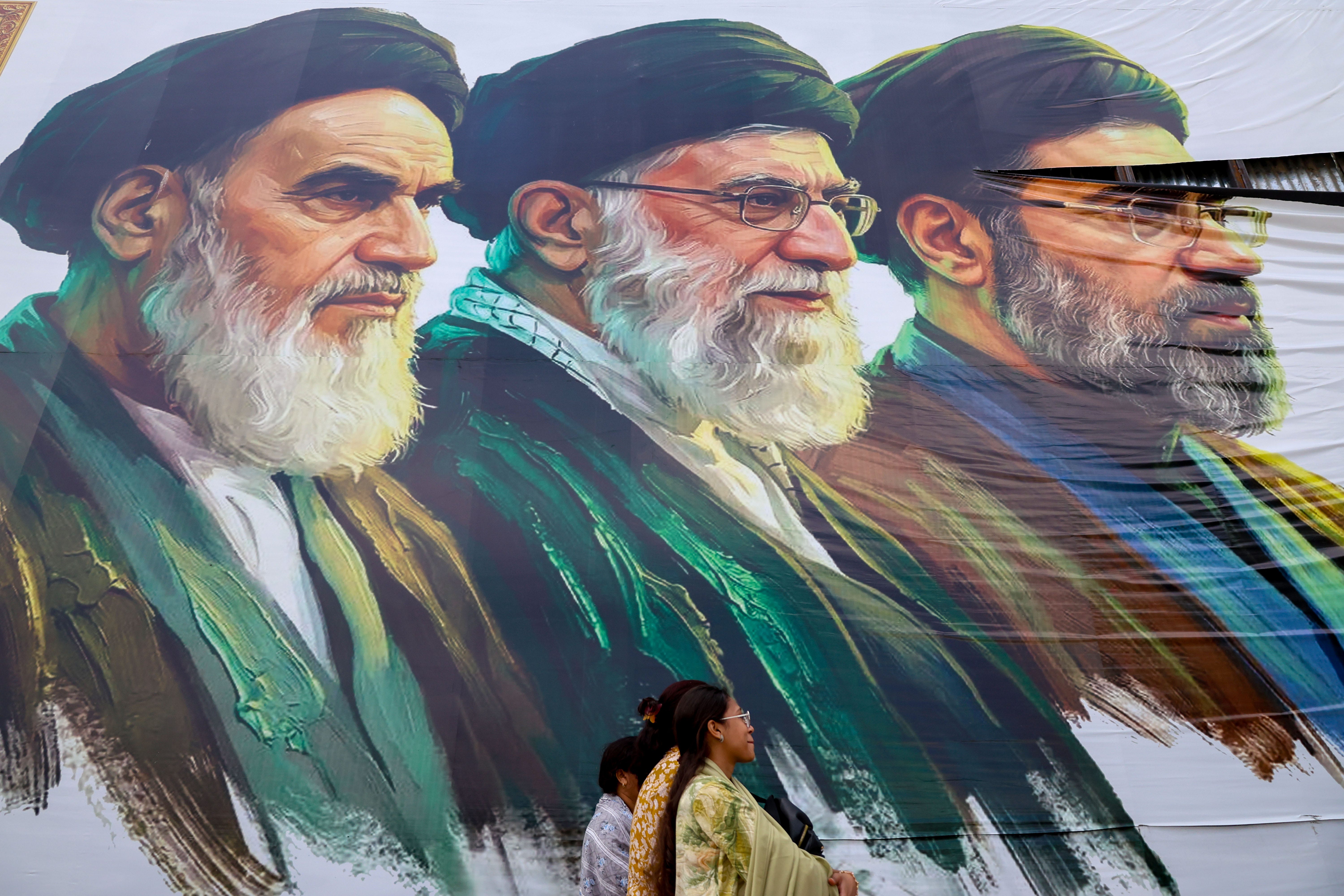
Trump is always the hero of his own disaster. He batters the economy with tariffs and then bails out the American farmers he bankrupted. He foments civil unrest in American cities with extremist ICE agents and then claims to restore order with the National Guard. Now, after setting the Middle East ablaze, Trump is posing as the firefighter extinguishing the flames.
The damage from his attack on Iran is incalculable.
The war itself was illegal, sanctioned neither by Congress nor international law. The next president who wants to launch an unprovoked attack on another country with zero warning to elected officials or the American people will be free to do so under this precedent. When China or Russia or some other neighborhood bully invades a sovereign state, the US will have lost all moral authority to condemn the attack.
Trump has sold out the Iranian people. Earlier this year, the Iranian regime slaughtered tens of thousands of its own citizens who rose up against it. The deal Trump struck with the mullahs has strengthened the regime, which has shown it can withstand the full might of the US and Israel, survive, and thrive. The average Iranian street protester would not be wrong to wonder: if Trump and Netanyahu couldn’t dislodge the regime, what chance does she have?
Trump has strengthened Iran’s overall position in the Middle East. “Many countries in the region are now courting Iran and looking to deescalate and rebuild ties,” Dan Shapiro, a former American ambassador to Israel, noted on X.
Trump hammered the US economy with an oil shock, which disproportionately punished Americans who were already hardest hit by inflation. The effects will linger. The Wall Street Journal notes, “even if [the US-Iran] deal holds, it would likely take months for the oil market to return to normal,” meaning prices will remain elevated into the fall.
While we don’t know all the details of the US-Iran deal, what we do know suggests that on the key issues, the deal makes everything worse than it was before the war or, at best, returns things to the pre-war status quo:
Strait of Hormuz: This was a non-issue before the war and now we will now pay Iran, via sanctions relief, to keep it open.
Iran’s nuclear program: Setting aside the fact that Trump previously said he had already destroyed it, the best outcome would be that we return to some version of the deal that Obama negotiated in 2015 and Trump withdrew from in 2018. But to the delight of the Iranians, Trump is declaring victory before the enormously difficult diplomacy required to craft a nuclear treaty has been finished. It is about as likely that Trump will have the patience to see that diplomacy through to a successful conclusion as it is that he will end the war in Ukraine or craft a plan to rebuild Gaza.
Iran’s military: Trump received nothing to halt Iran’s missile program and nothing to curtail its use of proxies in the region.
On top of all of that, the war is ending with US munitions stockpiles depleted and the US and Israel divided.
Iran’s leaders know what an easy mark Trump is in general, and they know that given his cratering poll numbers and the coming midterms, he’s even more desperate than usual for anything he can spin to his rabid supporters as a win. Iran is all too happy to show up in Switzerland on Friday and sign what they are downplaying as simply a “memorandum of understanding.”
This entire misadventure from start to finish was catastrophically stupid. But, as always with Trump’s most reckless decisions, the real blame lies with the MAGA cultists in Congress and the right-wing media who have defended all of this and empowered Trump to blunder into the next debacle, having learned nothing.
Trump now controls how you use the internet
On Friday, in an unusual order that has enormous implications for the future of AI, the economy, and the relationship between the private sector and the state, the Trump administration ordered Anthropic to deny foreign nationals access to Anthropic’s powerful new models, Fable 5 and Mythos 5.
If this were a normal administration, one might take the order at face value and conclude that this was a responsible use of government power in the face of an uncertain new technology that its own creators compare to the rise of nuclear weapons.
But this is not a normal administration, and so the Trump order needs to be greeted with deep skepticism.
First of all, the Pentagon has essentially blacklisted Anthropic for political reasons, labeling the company a “national security threat” and a “supply chain risk,” which are designations reserved for foreign adversaries. At the time of that decision, which seems likely to be declared unconstitutional and overturned by the courts, Trump called Anthropic a “radical left, woke company.”
The suspicion that this new order against Anthropic might be politically motivated was immediately given credence by a post from Defense Secretary Pete Hegseth, who wrote, “Three months ago, @DeptofWar kicked @AnthropicAI out of our building—forever. Every passing day proves why that was the right move.”
What a truly moronic thing to say about an American company worth nearly a trillion dollars and whose technology is the envy of every government in the world competing in the AI race.
Since AI is now baked into everything we do online, and an increasing number of apps and other device functions allow users to choose the AI model they want to use, Trump’s order has unilaterally constrained one of the most important choices we make when using the modern internet. It was done with little explanation and no debate. Because the Trump administration’s relationship with Anthropic is strained, to say the least, and Trump’s tech advisers are close to the leadership of OpenAI, whose CEO, Sam Altman, despises Anthropic CEO Dario Amodei, the move also reeks of an attempt to help Altman in the face of Anthropic’s enormous leap forward with Mythos.
While not a perfect analogy, imagine if Barack Obama had banned Google to help his friends at Bing.
The details of how the Friday decision was reached suggest a personal and political vendetta, which is the Trump administration’s guiding ideology. Trump aides just do not seem to like Amodei. For instance, Politico reported that a Trump official complained that Amodei didn’t immediately return a call because he was at a wellness retreat, which Anthropic says was false.
But whether Amodei was meditating at Esalen or getting a massage at Golden Door, it doesn’t really matter because he was on the phone with the White House an hour or so after they called. So the leaked detail just reads as a gratuitous shot at a CEO this administration wants to punish for petty political-cultural reasons.
The rift between the company and the White House is wide. “The White House gave 90 minutes to take the models down, with no details on the actual threat,” an Anthropic official told Politico. It’s hard to imagine OpenAI’s Altman getting that kind of treatment by Trump’s aides.
Again, a decision to temporarily take these Anthropic models offline until a legitimate threat has been mitigated could be defensible. Mythos 5 is the most powerful AI model ever released, and its use was restricted to a limited number of firms. Fable 5 is the Mythos version released to everyone but locked down with safety restrictions that prevent users from, say, hacking into the NSA or creating a biological weapon.
The Trump administration, with little evidence, alleges that Fable 5 can be jailbroken, unleashing its full unconstrained powers. Anthropic says that’s nonsense and that they are being unfairly singled out.
“We have reviewed a report that we believe is the basis of the government’s directive and validated that the level of capability displayed there is widely available from other models (including OpenAI’s GPT-5.5),” the company wrote in an announcement about suspending access to Fable and Mythos.
Whatever one thinks of the merits of various proposals to regulate AI, I think we can all agree this isn’t the way to do it.